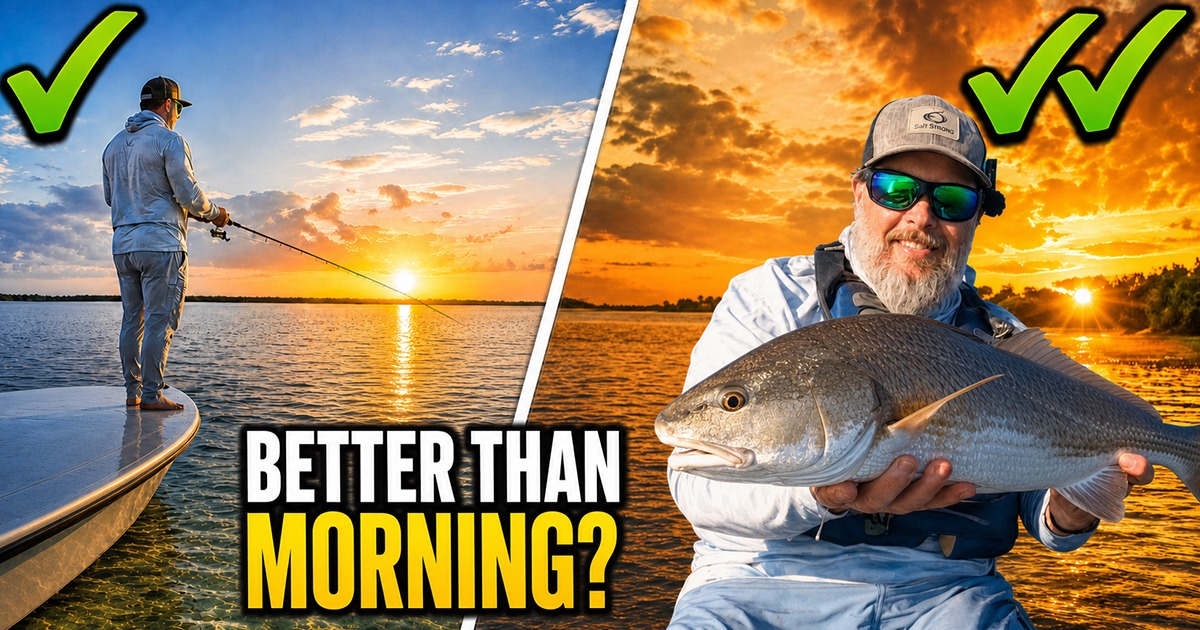
Ask almost any angler when to fish during summer, and they will tell you to get on the water before sunrise.
They are not wrong.

But summer often creates a second feeding window, and most anglers are already off the water before they realize it is happening.
It starts with a predictable chain of changes that makes bait more active and pulls predators back into striking range.
So, what triggers the second bite, and how can you tell when it is about to begin?

Featured Gear:
- Lure 1: Moonwalker topwater
- Lure 2: 4-inch Mulligan paddletail
- Lure 3: Wake Mullet crankbait
Featured Software:
What Creates the Second Summer Feeding Window?
Early morning fishing is productive because several favorable conditions happen at the same time.
The water has had all night to cool, baitfish become active, and low light helps predators approach their prey.
As the sun climbs, shallow water heats faster than deeper water. Fish are cold-blooded, so many will move toward deeper, cooler areas during the hottest part of the day.
That is one reason the afternoon bite can feel so difficult.
The process begins reversing as the sun gets lower.
Shallow water is no longer receiving the same direct heat, so it begins cooling. Baitfish become more comfortable and start moving into shallow feeding areas. At the same time, fading light gives predators the cover they need to follow.
Cooler shallows, active bait, and lower light begin recreating many of the same conditions that made the morning bite so productive.
What Signs Show That the Evening Bite Is Starting?
The exact timing can change from one day to another, so do not rely only on the clock.
Instead, watch what is happening around you.
Signs of increasing feeding activity may include:
- Baitfish becoming active near the surface
- Wading birds moving into shallow water
- Diving birds working over bait
- Predators striking at the surface
- Fish pushing wakes across a flat
- Increasing activity along shorelines and shallow edges
Afternoon storms can also accelerate the transition.
Clouds block sunlight, rain can help cool the surface, and wind can disturb and oxygenate shallow water. Together, these changes may encourage fish to become active earlier.
Always wait until a storm has completely passed before returning to the water. Lightning is never worth the risk.
Where Should You Fish During the Evening Window?
Look for shallow feeding areas with deeper water nearby.
Fish can remain in comfortable depths during the hottest part of the day, then move into the shallows as conditions improve.
Productive areas may include:
- Flats bordering channels
- Shorelines near a drop-off
- Points connecting shallow and deep water
- Creek mouths
- Oyster bars near deeper troughs
- Grass lines beside channels
- Sandbars next to deeper cuts
The most important feature is the relationship between deep and shallow water.
When those areas are close together, fish do not have to travel far to take advantage of the evening feeding opportunity.
Which Lures Work Best in Low Light?
You do not need an entirely different tackle box for evening fishing.
Many of the same lures that catch fish around sunrise will also produce as daylight fades.
A topwater lure is an excellent choice when fish are feeding near the surface. It can cover water quickly, imitate fleeing bait, and call fish from a distance. A built-in rattle gives predators another way to locate it.
A 4-inch paddletail is another strong option. The larger profile produces more vibration, which can help fish track the lure as visibility decreases.
A shallow-running crankbait such as the Wake Mullet stays close to the surface while producing vibration and sound.
Final Thoughts
Most anglers schedule their summer trips around the morning bite.
If early morning works for you, take advantage of it. Just do not assume it is your only opportunity.
As the sun gets lower, shallow water begins cooling, bait becomes active, and predators move back into feeding areas. You may also find fewer boats and much less fishing pressure.
Watch the bait, birds, light, weather, and nearby depth changes. When those clues begin coming together, move shallow and get ready.
Have you caught more summer fish during the morning bite or during the final few hours before sunset?



As always great information always learning something different thanks Pat
Thank you James!
Very good video but when it gets hot and you fish deeper how do you work your baits
Usually really slowly, almost a constant drag on the bottom. When it’s hot the fish typically won’t want to run a bait down. This is where live or cut bait can have an advantage
Thanks Pat, good reminders.
Thanks for watching!
Great info. Thanks Pat.
Glad you liked it Richard! Thanks for watching!
Wonderful video filled with a lot of great information and tips Pat. I love the evening fishing because there are little to no one else out there and it seems like the fish are more aggressive.
Agreed! Most people are home and you can have the whole place to yourself. My last late afternoon/early evening trip was exactly that way and as soon as the sun got low and it was the golden hour, tails popped up everywhere!
Great stuff Pat! That evening bite is often overlooked!
Yes, it sure is!
Awesome info. I fish an area that compliments both shallow and deeper water.
We fish the flats on the side of a channel. And move more to the channel which is over 20’ deep as the bite slows on the flats.
SaltStrong has the most awesome tips and tricks. I highly recommend you guys to others. Tight lines!!🎣
So happy to hear you’re enjoying your membership! Thanks for watching!
Excellent info Pat. My wife will be happy with one less 3:30 am alarm.
Another reason winter fishing is so good, you get to sleep in!
Great info, Thank you Pat!!
You’re welcome Bobby!
Great tips Pat, thanks for sharing.
Glad you liked it Stan!