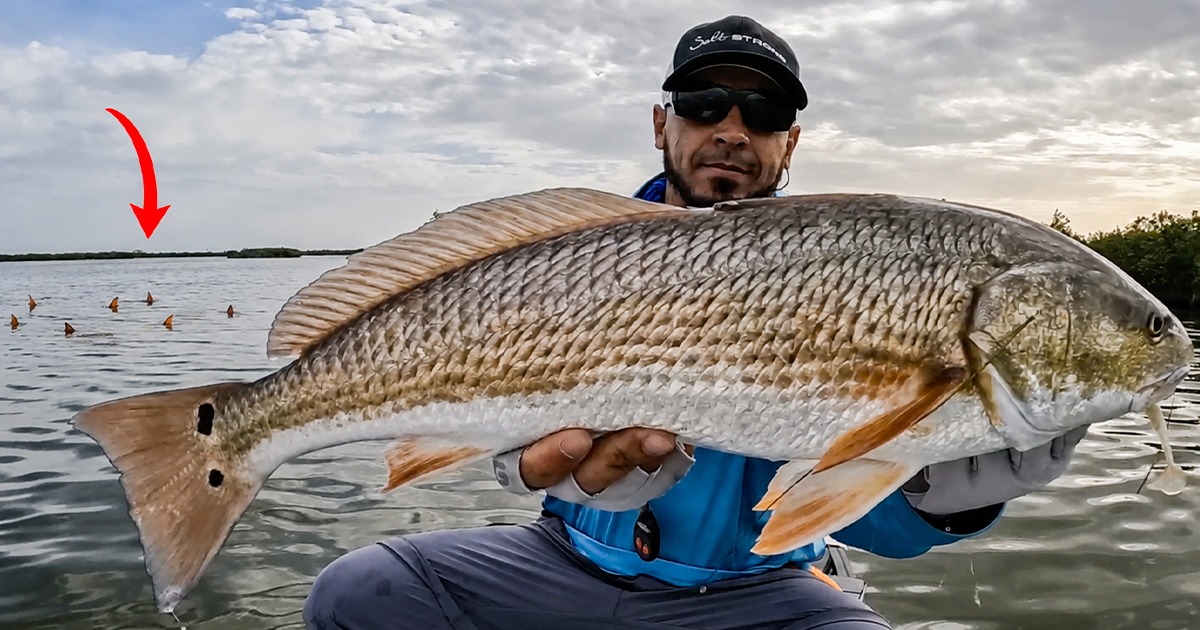
Ever pull up to brand-new water and think, “Where the heck do I even start?”
When everything looks fishy, it’s easy to burn the best part of the morning in the wrong place.
In this video, you’ll see how to narrow the search down to three promising areas, then evaluate them under real fishing conditions.
You’ll walk away with a simple game plan to stop guessing, keep solid backup options, and spend more time fishing high-percentage water.

Featured Software:
Featured Gear:
- Rod: Slot Machine Medium
- Reel: Otis 2500
- Lure 1: The Mulligan 4″ Paddletail
- Hook: 3/0 Hoss Helix Hook 1/16oz
- Mainline: Diawa J-Braid 10lb
- Leader: Ande 15lb Mono Leader
How To Find Spots In New Water
When fishing an unfamiliar area, avoid building the entire trip around one location.
Coach Tony used Smart Fishing Spots to select three promising areas with different types of structure:
- A shallow shoreline
- An island point with cuts and a protected cove
- An area containing points, oyster beds, islands, and backwater habitat
Selecting different types of spots allows you to test multiple patterns.
Redfish may be holding tight to a shoreline, feeding around a windblown point, or moving through protected backwater. If all three selected spots feature the same structure, you may continue testing the same unproductive pattern throughout the trip.
Before finalizing the plan, also consider the tide, wind, water level, and time of day.
This trip began before sunrise, while summer water temperatures were still relatively cool. Slack tide was approaching, but an incoming tide was expected to begin moving water shortly afterward.
The goal is to choose several high-percentage areas that provide options as the conditions change.
How To Approach And Evaluate A Spot
Selecting the spot is only the first step. How you approach it can determine whether you get an opportunity.
Extremely low water and thick grass made reaching the first area more difficult than expected. Slowing down revealed bait and fish activity before the actual spot was reached.
A weedless four-inch paddle tail was used to search the grass. The best casts were directed toward sections with ripples on the surface, where the vegetation remained slightly below the water.
Those observations led to two redfish before reaching the first planned area.
When approaching a Smart Spot, watch for:
- Tailing fish
- Surface wakes
- Nervous or showering bait
- Feeding birds
- Rippled openings in thick grass
- Shoreline corners
- Points and cuts
- Oyster beds
- Wind-driven current
These signs can reveal where fish are concentrated within or around the larger area.
Avoid running directly into the center of the spot. Begin watching the water as you approach, and be ready to stop if you see activity.
Once there, evaluate the area efficiently. If there are no signs of bait or gamefish, move to the next option rather than forcing an inactive spot to produce.
How To Save Productive Fishing Patterns
After the trip, the route and catches can be reviewed inside the app.
Logging each catch preserves useful information such as:
- Catch location
- Time and tide stage
- Wind and weather conditions
- Moon phase
- Air temperature
- The route taken through the area
This creates a record of which spots held fish, which areas lacked activity, and where opportunities appeared along the approach.
Over time, these logs can reveal repeatable seasonal patterns. If redfish consistently appear near similar shorelines, points, grass openings, or tide stages, that information can help guide future Smart Spot selections.
Instead of starting from scratch on the next trip, you can build on what the fish already taught you.
See a more detailed overview of the catch log and tracking feature here.
Final Thoughts
A three-spot game plan makes unfamiliar water much easier to approach.
Use Smart Fishing Spots to select several high-percentage areas with different types of structure. Then let the conditions on the water refine the plan.
Watch for bait, birds, wakes, tails, grass openings, and moving water as you approach each spot. Be willing to stop early when you see activity, and move on when an area shows no signs of life.
Smart Fishing Spots can narrow down where to begin. Careful observation helps identify exactly where to cast.


First time post so no one be too upset if I missed something. Thanks for the video Tony. Any day we can get on the water and come home safe is a good day. So the only thing that you would obviously be able to see if you filled out your fishing spots thing I think would be helpful if just watching the video would be telling folks how long you spent on the water so folks can kind of gauge how long it’s gonna take them to fish a certain area if they have a limited amount of time? Does that make sense? Thanks again and fishing is awesome
You’re welcome Chris and thank you for the feedback! How long it takes to fish an area can vary tremendously. Highly depends on what you see and experience when you get to the area, and also the size of the area you are fishing. If you have a limited amount of time I recommend picking a handful of smaller spots that are close to each other.
Great video Tony. How do you pick your target when you come on a school of tailing redfish?
Thanks Joseph! I typically try to cast to the edge of the school of if I see a single fish that may be just outside of the main group of fish. Never want to throw right in the middle of them (which can happen often with a bad cast – which I am guilty of on occasion haha)
Awesome morning
Thanks David!
Great video, thanks Tony!
You’re welcome JD!
Terrific action & video! Learned a lot & had fun doing it! Thanks so much!
You’re welcome Rhett!
Good one Tony. Very helpful. and human!
Thanks Jim!
Good stuff, Thx. Do you have to start a track before you can import a picture along the track?
You’re welcome Joe! Nope you can log a catch without the track. Just hit the camera icon on the top right of the screen to take a picture of your catch, add the details and save. Using it in combination with the track can be helpful to see where you went throughout the trip.
great video. More relevant to me here on the east coast in murky water than the clearer water angling of the west coast.
Thanks Dave!
EXCELLENT VIDEO TONY !!!
Walk the walk and talk the talk !! SPOT ON PROOF !!! OUTSTANDING JOB 🎣
Thanks Dave!
Is there a ramp or kayak can to launch
Hey Robert! I launched from Riverbreeze boat ramp. there is also a kayak launch there.